
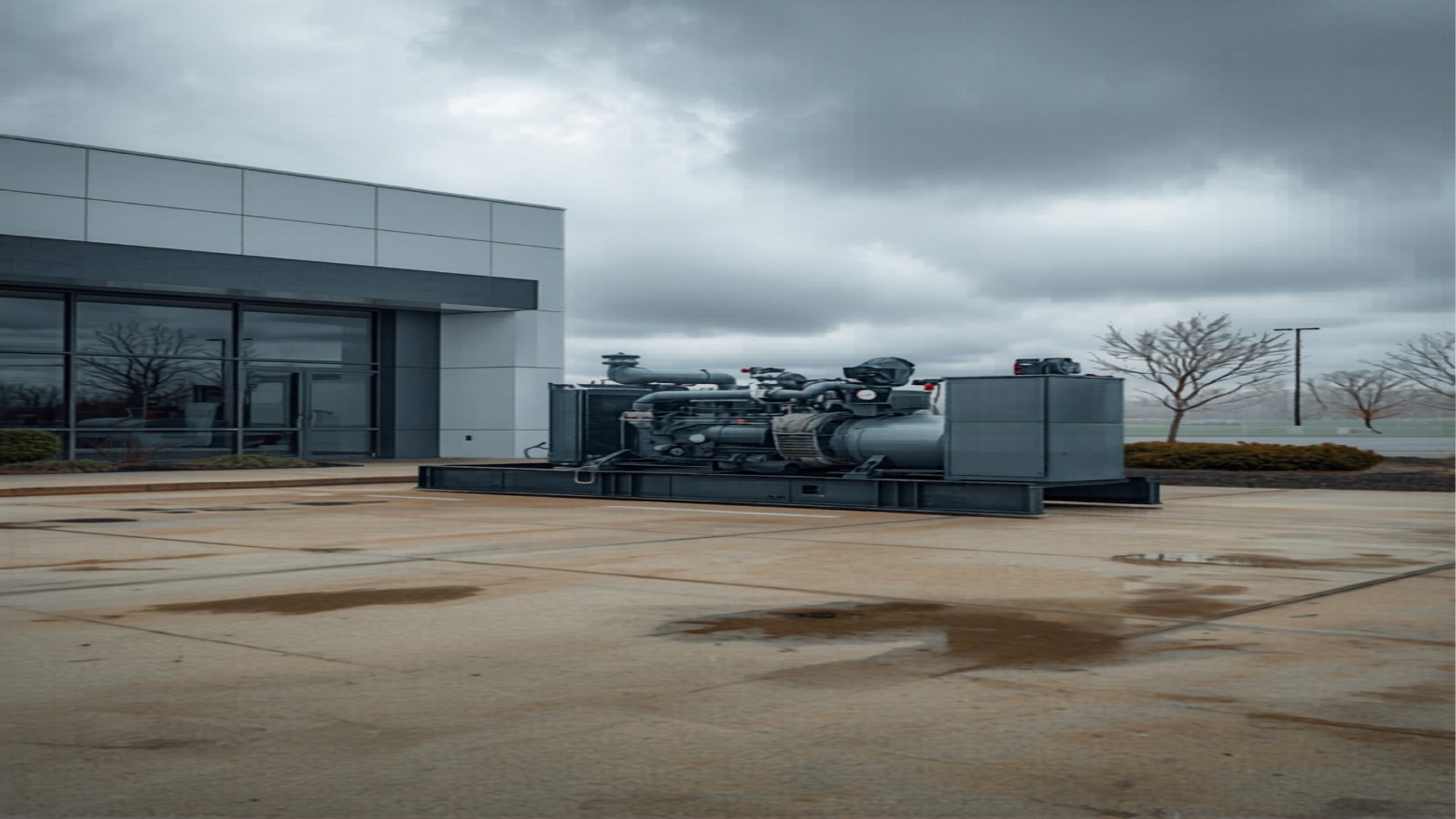
Data centers sell uptime. Every backup generator on-site is a commitment to customers that power will not go away. Fuel is the part of that commitment that most easily gets overlooked - it is not glamorous, not high-tech, and it rarely fails. Until it does. The questions below are what facility managers should be putting to their fuel supplier before the next planned outage test - or before the next unplanned one.
Runtime sizing
Generator runtime is a function of load, not nameplate capacity. Most facilities plan for 72-96 hours of runtime at design load. The actual calculation requires the generator's full-load fuel consumption rate (gallons per hour at 100% load), the expected load percentage during an outage, and the usable tank capacity after accounting for unusable heel volume.
Critical variables to confirm with your fuel supplier: can they guarantee delivery during a regional emergency, and what is their priority tier structure for data center accounts versus standard commercial accounts? Those are different commitments and should be documented in writing.
Fuel quality
Diesel stored in stationary tanks degrades over time. Oxidation, microbial growth, and water accumulation all accelerate in tanks that see infrequent turnover - exactly the conditions of a backup generator tank that only runs during tests and actual outages.
ASTM D975 sets diesel fuel quality standards. Ask your supplier what testing they perform on delivered fuel, how they document it, and whether they provide certificates of analysis on request. For NFPA 110 compliance, documentation of fuel quality is not optional.
Monitoring
Manual gauge checks are not adequate for mission-critical applications. Remote tank monitoring with real-time alerts gives both your team and your fuel supplier visibility into consumption during an outage. The monitoring system should alert at a defined low-level threshold - typically 50% - with enough lead time for a delivery before hitting critical levels.
Confirm that the monitoring system integrates directly with your fuel supplier's dispatch. A monitor that alerts your team but requires a phone call to trigger a delivery adds a human step that can fail at 2 AM during a nor'easter.
Fuel polishing and tank maintenance
Tanks that hold fuel for extended periods between generator tests need periodic maintenance. Fuel polishing removes particulates, water, and microbial contamination that standard filtration misses. The cadence depends on tank age, turnover rate, and fuel quality history - but annual polishing is a reasonable baseline for most data center applications. Budget it as a line item, not an emergency response.
Testing and exercise
NFPA 110 requires monthly exercise runs and annual full-load tests for Level 1 emergency power systems. Each test consumes fuel. The exercise schedule should be coordinated with the delivery schedule so tanks are topped off before major tests, and test fuel consumption is documented as part of the maintenance record.
Documentation for compliance
Fuel delivery records, fuel quality certificates, tank inspection reports, and monitoring logs are all components of an NFPA 110 compliance package. Ask your fuel supplier what documentation they provide with each delivery and whether they can support annual compliance reporting.
Questions to ask your fuel supplier
- What is your guaranteed delivery window during a declared regional emergency?
- Do you maintain a priority customer list, and what qualifies a facility for it?
- What documentation do you provide on delivered fuel quality?
- Does your monitoring integration trigger automatic dispatch or just an alert?
- Can you provide delivery history in a format compatible with NFPA 110 documentation requirements?
Related Resources
Questions about fuel delivery for your facility?
Call (215) 659-1616 or get a quote online. Fox Fuel serves commercial accounts across Pennsylvania and New Jersey from our Willow Grove location - family-owned since 1981.